Fewer chances but more goals: Why the 2026 World Cup is record-breaking
The 2026 World Cup is seeing a scoring surge of 3.1 goals per match. Analysts attribute this to clinical finishing by stars and struggles from lesser-known goalkeepers.
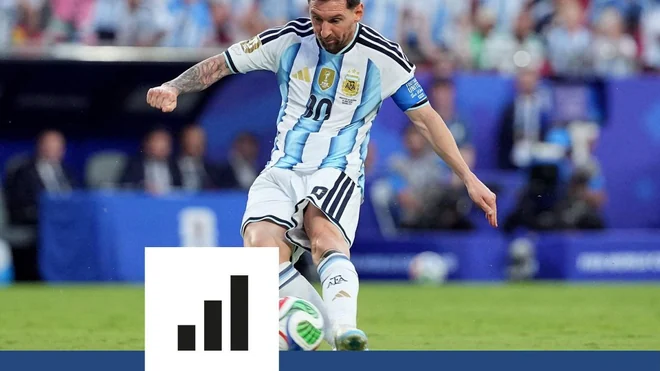
Lionel Messi, auteur d'un triplé frappe de près, à mi-distance et lointaine. (F. Faugère/L'Équipe)
The 2026 World Cup has kicked off with a remarkable scoring rate of 3.1 goals per match, the highest since 1958. With the tournament expanded to 48 teams, the sample size of 24 matches is already significant enough to draw early conclusions about this high-scoring trend.
However, an interesting anomaly has emerged: Opta data shows the lowest Expected Goals (xG) per match since 1998. Teams are over-performing significantly, scoring 74 goals from just 60 xG. Historically, the last seven editions saw more chances created than goals scored, making the current efficiency rate highly unusual.
A major factor appears to be the performance of goalkeepers. Many of those representing lower-ranked nations lack experience at the highest level. In several matches, these keepers have struggled to compensate for the talent gap, conceding goals that would typically be saved in top-tier competition.
Simultaneously, attackers are increasingly opting to shoot from distance. With defensive blocks sitting deeper, strikers are exploiting space just outside the penalty area, often referred to as "zone 14". Thirteen goals have already been scored from outside the box, signaling a shift away from the overly rigid, data-driven construction patterns that had previously discouraged long-range shooting.