Football is too powerful for one king: why the FIFA presidency must go
Gianni Infantino’s unchecked influence and the lack of internal dissent within FIFA have sparked calls for a structural overhaul of the governing body.
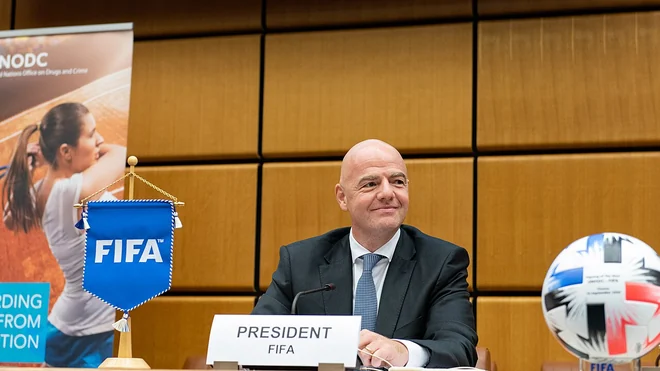
Photo: Wikimedia Commons / CC BY 2.0 / Author: United Nations Office on Drugs and Crime
Global football is currently facing a crisis of accountability, with FIFA president Gianni Infantino’s unilateral decision-making raising serious questions about the future of the organization. Recent controversies, including the secretive push for private equity involvement that was hidden from the FIFA Council, have exposed a dangerous lack of oversight.
What is most striking is the response from national associations. Following Infantino’s forced U-turn on the private equity scheme, a wave of orchestrated support flooded in from across the globe. These pledges of loyalty, similar in structure and tone, suggest that the football world is increasingly functioning as a royal court, where member nations are incentivized to pledge allegiance to maintain their standing.
The incident involving Prince Ali bin Al Hussein, who claimed that prize money for the Jordanian national team was delayed until the association signaled support for Infantino, highlights the potential for systemic abuse. While the funds were eventually released, the episode served as a stark warning about how the presidency can be used to secure compliance.
Football has become too large, too wealthy, and too significant to place absolute power in the hands of a single, largely unconstrained individual. The current structure allows the president to operate almost independently of the organization they are meant to serve.
Real reform is necessary to prevent the office from being used as a tool for personal ambition. Whether through a rotating presidency between confederations, stricter term limits, or transitioning to a more ceremonial role, the lesson is clear: no individual should hold such unchecked power over the game. Without structural changes, international football will remain at the mercy of the ideology of its leader.